
Maui homes For Sale
- Haiku Homes For Sale
- Haliimaile Homes For Sale
- Hana Homes For Sale
- Honokowai Homes For Sale
- Kaanapali Homes For Sale
- Kahakuloa Homes For Sale
- Kahana Homes For Sale
- Kahului Homes For Sale
- Kanaio Homes For Sale
- Kapalua Homes For Sale
- Kaupo Homes For Sale
- Keanae Homes For Sale
- Keokea Homes For Sale
- Kihei Homes For Sale
- Kipahulu Homes For Sale
- Kuau Homes For Sale
- Kula Homes For Sale
- Lahaina Homes For Sale
- Lanai Homes For Sale
- Launiupoko Homes For Sale
- Makena Homes For Sale
- Maalaea Homes For Sale
- Makawao Homes For Sale
- Maui Meadows Homes For Sale
- Molokai Homes For Sale
- Nahiku Homes For Sale
- Napili Homes For Sale
- Olinda Homes For Sale
- Olowalu Homes For Sale
- Paia Homes For Sale
- Pukalani Homes For Sale
- Spreckelsville Homes For Sale
- Ulupalakua Homes For Sale
- Wailea Homes For Sale
- Waihee Homes For Sale
- Wailuku Homes For Sale
Mauis Controversial 13M Napili Home Now Offering Partial Ownership to Buyers

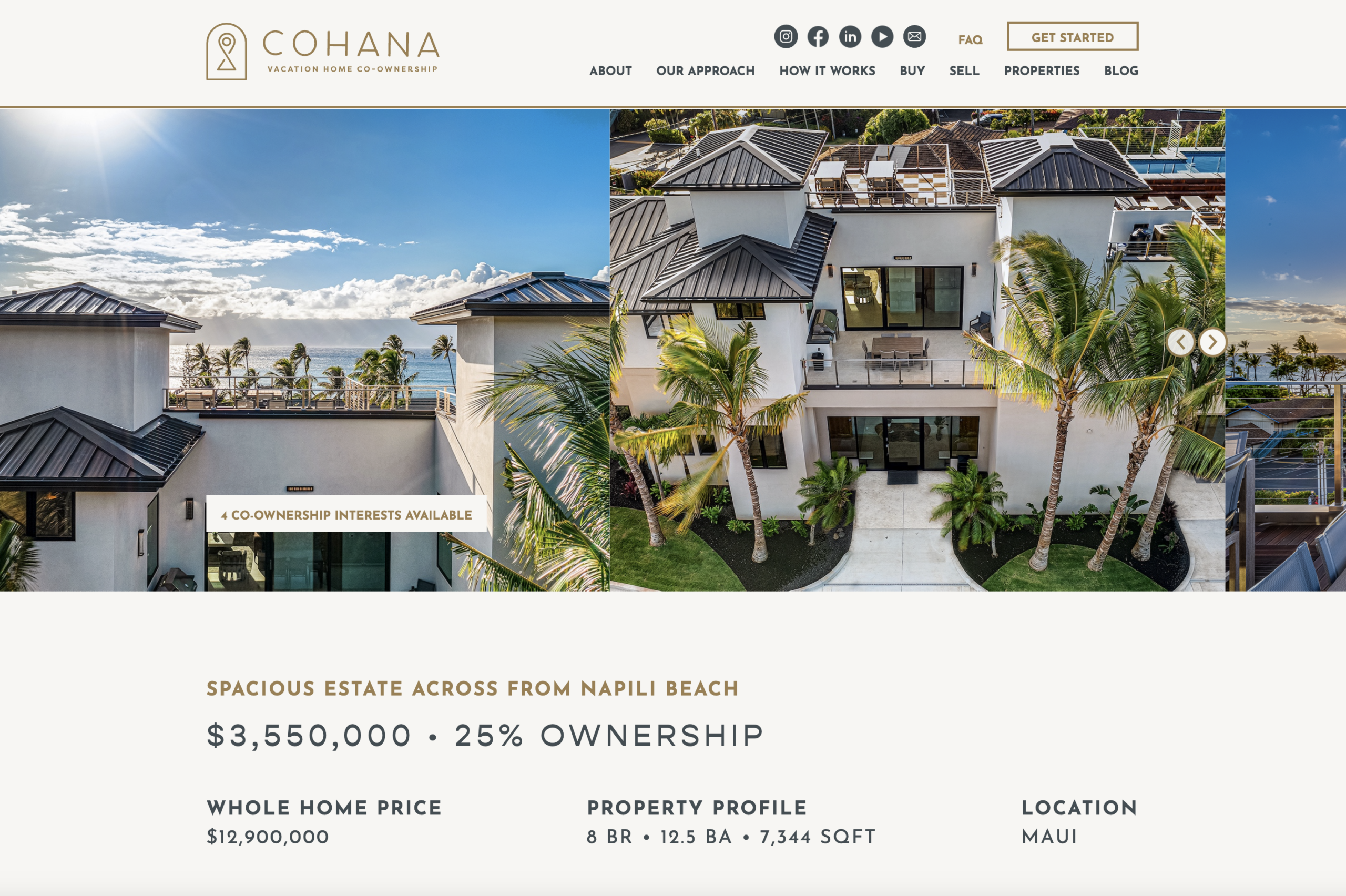
The massive eight-bedroom estate in Nāpili that once sparked a firestorm of community backlash is back in the headlines. Often referred to by locals as a "monster house" due to its hotel-like scale, the property is now being marketed under a unique co-ownership model.
Cohana Homes, a luxury vacation home company, is offering 25% ownership interests in the 7,344-square-foot property for $3.55 million per share. While the developers argue this is a "smarter way to own second homes," critics worry it is simply a new way to exploit loopholes in Maui’s strict vacation rental laws.
The Property at a Glance
Located at 5385 Lower Honoapi‘ilani Road, the home is a titan of residential construction:
- Value: $12.9 million total.
- Size: 8 bedrooms and 12.5 bathrooms.
- Amenities: Rooftop swimming pool, spa, outdoor rooftop kitchen, and an elevator.
- History: Originally drew criticism for its 45-foot height and its potential use as a "hidden hotel" in a residential area.
Co-Ownership vs. Timeshares: The Legal Gray Area
The move to sell partial interests has reignited a debate over what defines a "timeshare" on Maui.
In 2022, Maui County passed a law specifically targeting companies that sell fractional ownership. The law was intended to prevent LLCs from rotating multiple owners through a property for short stays. Under the current code, a "transient" user is defined as anyone using a dwelling for less than 180 days whose permanent legal address is elsewhere.
The Developer’s Stance: Dean Otto, co-founder of Cohana, argues that co-owners are different from vacation renters. He describes them as "committed, long-term users" who respect the island’s cultural balance. He also notes that Cohana’s model requires co-owners to sell the property together after a set term (usually five years), which he claims distinguishes it from a traditional timeshare.
The Community’s Stance: Council Member Tamara Paltin, who represents West Maui, remains skeptical. She noted that while the county tries to troubleshoot loopholes, developers often find new ways to exploit them. Chris Salem, a long-term opponent of the project, echoed this sentiment, warning potential investors that this situation falls under the category of "buyer beware."
Why is This House So Controversial?
The Nāpili home has a long and litigious history that has frustrated residents for years:
- Permit Exemptions: The project bypassed public hearings by claiming it was a single-family home under 7,500 square feet.
- "Monster" Scale: Once construction began, residents were shocked to see a 45-foot-tall structure that looked more like a boutique resort than a family residence.
- Stop-Work Orders: In 2021, the county briefly halted construction because the building exceeded height and floor-area limits. It was only allowed to proceed after some floor space was removed.
- Zoning Shifts: The controversy was so intense it led the council to change height laws in the district to a strict 30-foot or two-story limit, though this home was largely "grandfathered" in under older rules.
Current Status
Despite the years of protests and even talk of the county taking the property through eminent domain, the Planning Department currently lists the home as compliant with county regulations. As Planning Director Jacky Takakura stated, "The property owner can sell the property."
Whether the new co-ownership model will face a legal challenge under the 180-day occupancy rule remains to be seen.